
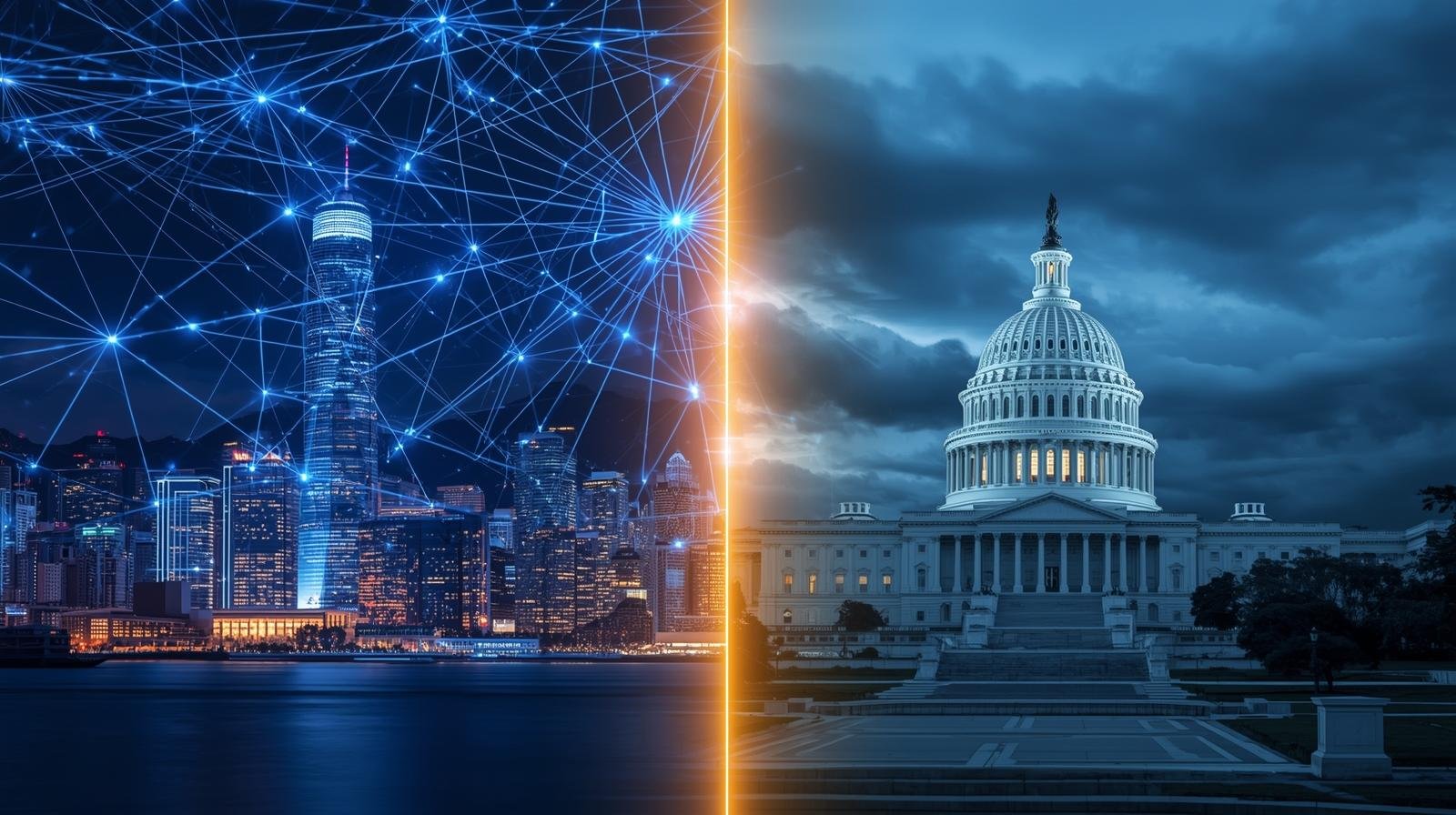

Hong Kong’s Crypto Pivot and the U.S. ETF Delay: A Global Race for Digital Finance
Something important is happening in global finance. For sure it’s not about price charts or daily market noise. It’s about who writes the rules for the digital economy. While the United States continues to postpone long-awaited crypto ETF approvals, Hong Kong is accelerating its plans to integrate digital assets into its financial system. The contrast between hesitation and experimentation may define the next decade of market infrastructure.
From Policy Delay to Opportunity Shift
At the end of October, the U.S. Securities and Exchange Commission (SEC) postponed another round of decisions on spot Bitcoin exchange-traded funds (ETFs). The applications — from institutions such as BlackRock and Fidelity — were delayed again until mid-December, largely due to administrative holdups after the brief government shutdown. For the crypto market, it felt like déjà vu. Every few months, optimism builds, the SEC asks for more comments, and another deadline is pushed forward.
Each postponement matters. Spot ETFs would give investors regulated access to crypto exposure without the operational risk of unregulated exchanges. Pension funds, insurers, and portfolio managers have been waiting for this bridge to open. Instead, they get more waiting — and uncertainty has a cost. It discourages capital formation and slows adoption in the world’s largest market.
Meanwhile, across the Pacific, Hong Kong is seizing the moment. The Hong Kong Monetary Authority and the Securities and Futures Commission jointly introduced a tokenisation pilot and relaxed trading rules that mark a major pivot. Licensed financial institutions will be allowed to issue and trade tokenised securities — digital versions of traditional assets like bonds, funds, or real estate. This isn’t a speculative move; it’s a strategic attempt to rebuild the city’s status as Asia’s financial hub after years of pandemic disruptions and capital flight.
Why Rules Shape Markets More Than Hype
Investors tend to focus on price, but policy is what sustains those prices. The SEC’s caution has left the U.S. market in regulatory limbo. The framework for digital assets remains largely enforcement-based — companies learn what not to do only after being fined for doing it. That creates hesitation. In Hong Kong, the direction is different: start with rules, then innovate within them.
By introducing a controlled sandbox, Hong Kong is sending a clear signal to global banks and fintechs — experiment, but do it inside a system that protects investors and upholds compliance. It’s a balanced message that bridges the trust gap created by scandals like FTX and Celsius. And it’s working: applications for virtual asset licenses have been increasing steadily since the policy shift earlier this year.
Regulation, when done early and clearly, attracts capital. It also shapes infrastructure. Just as early internet policy determined where tech giants emerged, the first countries to master digital-asset frameworks may define where the next generation of financial institutions are based.
The Broader Context: A Diverging Philosophy
Both the U.S. and Hong Kong believe they are protecting investors — but they are using opposite playbooks. The SEC’s approach is rooted in caution, assuming that restricting access limits harm. Hong Kong’s model assumes that clear, transparent participation reduces harm by replacing the shadow market with a regulated one.
The difference in tone has real-world consequences. Developers and financial engineers now see Hong Kong, Singapore, Dubai, and the EU as places willing to test tokenisation and blockchain-based settlement. The U.S. remains the world’s largest pool of capital — but increasingly, innovation happens elsewhere, and capital follows innovation faster than regulation can catch up.
Tokenisation: From Concept to Core Infrastructure
Tokenisation is often misunderstood as another crypto trend. In reality, it’s a re-engineering of financial infrastructure. Instead of keeping assets siloed in proprietary databases, tokenisation turns them into programmable units that can move between institutions instantly, with transparent settlement and verifiable audit trails.
The economic implications are large. A recent analysis by Coindesk and consulting groups like BCG suggests that the market for tokenised real-world assets could exceed $10 trillion by 2030. In 2025 alone, pilots by JPMorgan, BlackRock, and UBS tested how tokenisation could streamline bond issuance and fund management — settlement that once took days could drop to minutes, cutting costs and intermediaries.
Hong Kong’s pilot aligns with this global shift. It’s not about promoting speculative tokens; it’s about modernising capital markets. By integrating blockchain into its regulatory perimeter, the city is effectively future-proofing its infrastructure. If the experiment works, tokenisation could become standard in its bond and fund industries within a few years.
What Makes Hong Kong’s Strategy Different
Hong Kong’s regulators are pragmatic. They are not promising a crypto utopia — retail investors still face restrictions, and all service providers must obtain licenses. But by allowing banks and securities firms to operate tokenised products within a monitored environment, the city bridges compliance and innovation.
There’s also a geopolitical dimension. Mainland China maintains strict prohibitions on cryptocurrency trading, yet Beijing has quietly supported Hong Kong’s experiment. The result is a dual-track model: the mainland focuses on **state-controlled digital currency**, while Hong Kong explores **market-based digital assets** — a controlled ecosystem that could influence Asia’s entire financial landscape.
Meanwhile, in Washington
Across the Pacific, the tone remains cautious. The SEC continues to seek “further analysis” of market manipulation risks, despite years of data showing increasing maturity in Bitcoin’s trading structure. U.S. officials cite investor protection — but the result is that large financial institutions must wait while competitors in Asia and Europe gain experience.
Each time the SEC delays, Bitcoin prices dip and recover as investors bet approval is inevitable. As Galaxy Digital analysts note, an approved ETF could bring $15–20 billion in inflows within the first year — a structural re-rating of crypto as an asset class.
The irony: the U.S. still holds all the tools — deep capital markets, institutional trust, and regulatory credibility. But leadership requires direction, not inertia. Washington’s silence speaks louder than any press release.
Asia’s New Financial Identity
For Hong Kong, this pivot is also about identity. The city has spent years redefining its role after capital flight and declining liquidity. By embracing digital finance, Hong Kong signals to investors: we’re still here, and we’re adapting.
There’s early evidence it’s working. Inflows to Hong Kong-based digital asset funds have grown through 2025, and major banks are reopening blockchain trading desks. Startups that once looked west are finding local venture capital ready to back tokenisation projects. The city is positioning itself as a gateway where East meets West.
Beyond Crypto: The Real Stakes
The bigger story isn’t about coins; it’s about the evolution of market infrastructure. Tokenisation enables 24-hour markets, instant settlement, and cross-border participation. In practice, it’s the next step after ETFs — the point where financial products become software.
For institutions, this opens massive efficiency gains: real-time portfolio rebalancing, lower reconciliation costs, and better risk visibility for regulators. The benefits are operational, not ideological.
But innovation without regulation can backfire. That’s why Hong Kong’s methodical rollout matters — it mirrors the early internet finance era: start small, test, and scale safely. The U.S., by contrast, is still debating definitions while the architecture evolves elsewhere.
Capital Flows Follow Clarity
Markets reward clarity, not ideology. That’s why cautious institutions are watching Hong Kong. It’s a test case for how a global city can rebuild credibility through innovation. If it works, expect other financial centers to follow.
For the U.S., the choice is clear: approve ETFs and integrate tokenised assets, or let others set the global standards — and once standards form, they’re hard to dislodge.
A Quiet but Defining Race
Technological revolutions rarely happen overnight. The divergence between Hong Kong’s policy energy and America’s regulatory inertia may look minor today, but these small differences accumulate into structural change.
In the 1980s, semiconductor leadership moved to Asia. In the 2020s, EV dominance followed. Now, financial infrastructure could be next. The city that defines digital asset rules early will attract innovation and liquidity. Hong Kong is acting on that; the U.S. still has time — but the window is narrowing.
Looking Ahead
By early 2026, results will show. If the SEC approves ETFs, U.S. markets may see a surge of institutional inflows. If Hong Kong’s pilots succeed, Asia could become the center of blockchain-based finance. Together, these shifts will shape how capital flows and markets evolve over the next decade.
For now, crypto’s future is being decided by policymakers. Regulation has become the new monetary policy — and the countries writing the clearest rules are the ones quietly winning the race.
Read more in how the Fed pivot changed investor psychology and the data-driven reset shaping 2025 markets.
This article is for informational and educational purposes only. It does not constitute financial, investment, or legal advice.
All economic and financial policy discussions are presented for scenario analysis and illustration only. Investing involves high risk, and you may lose capital.
Always conduct your own independent research and consult a qualified professional before making any financial decisions.