
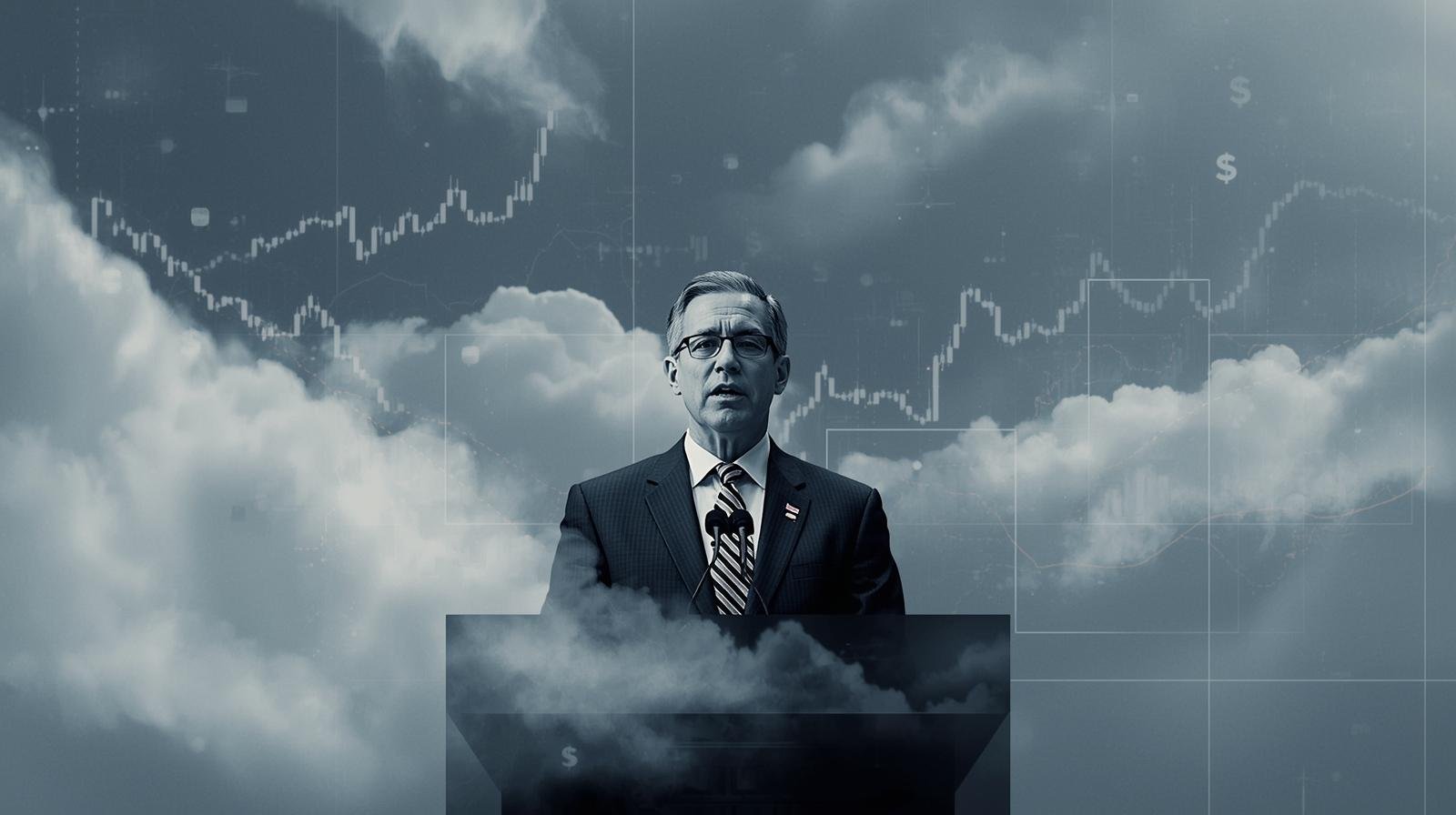

Markets don’t seem anxious about what the Federal Reserve will do today. They’re anxious about how Jerome Powell will explain it.
Futures have been signaling a rate cut for weeks, and investors see the move as a near certainty.
But in typical fashion, the real story may not be the policy itself — it’s the message that comes with it.
Traders across Wall Street agree that Powell’s words could define whether this is a one-off trim or the beginning of a genuine easing cycle.
That’s why risk assets are holding firm ahead of the announcement. Stocks remain buoyant, yields are stable, and even crypto has caught a cautious bid. The decision may be priced in, but the tone isn’t.
At GreenCandlesHub, we think today’s Fed meeting matters less as a monetary event and more as a psychological one. Whatever Powell says this evening could decide whether investors start believing in a dovish pivot — or brace for another false dawn.
The Pivot Happened in Sentiment First, Policy Second
Central banks like to talk about “financial conditions.” Most investors hear that and think: yields, spreads, dollar strength, equity valuations. But underneath all of that sits something softer and harder to measure — confidence. When Powell signals, even indirectly, that “we believe we’re on the right side of inflation now,” he’s not just describing the economy. He’s granting permission to take risk again.
The market has always traded perception first and data second. In 2019, a similar tone shift preceded the recovery well before fundamentals turned. The same happened in 2020, when policy reassurance ignited a chase into tech stocks and long-duration assets. Now, in 2025, investors are front-running a cycle that may barely have begun.
That’s what makes this October meeting so powerful. The policy change itself is incremental. The tone shift — “we’re comfortable guiding this landing” — is monumental.
Liquidity Used to Be the Stimulus. Now It’s Language.
A decade ago, traders watched the Fed’s balance sheet like hawks. QE on meant the party was on; QE off meant brace for impact. That world is fading. The Fed isn’t flooding the system with trillions every time markets wobble. Yet assets are still behaving as if liquidity just improved.
Why? Because guidance has become policy. When the Fed merely hints that the direction of travel is easier, financial conditions often loosen on their own. Yields drift lower, credit feels safer, and speculative corners of the market — from AI-heavy tech names to Bitcoin — start heating up again.
We’re watching an inversion: the Fed isn’t just reacting to markets; it’s managing belief.
“The most powerful stimulus in 2025 isn’t money printing. It’s confidence management.”
This isn’t theoretical. In our recent piece on Dollar Dominance 2025, we noted that the greenback’s stability still rests on global trust in U.S. policy credibility — an asset class in its own right. The same dynamic applies here: communication, not liquidity, is doing the heavy lifting.
The Fed Is Now Competing in the Attention Economy
Here’s the uncomfortable truth: macro data doesn’t drive narrative anymore — narrative drives how data is interpreted. In 2025, a mild CPI beat can fade from memory within hours, but one dovish phrase from Powell trends for days. Clips circulate on X, models reprice, and retail sentiment follows.
The market has become structurally wired to react to tone first. Funds scrape Fed statements in real time, scoring words for “hawkish” or “dovish drift.” Algorithms move billions in milliseconds. Retail traders see the move, label it “the pivot,” and pile in. Central bank language has become content — with engagement metrics and its own form of virality.
A Bank for International Settlements report recently described communication as an emerging form of policy easing. That’s exactly what we’re seeing in markets today.
We explored a similar shift in asset management in Active ETFs: Visibility Over Performance — where attention itself becomes alpha. The Fed, knowingly or not, now operates in the same attention loop.
The Market Winners — and the Risks of Overconfidence
When the market decides “the Fed is comfortable again,” capital moves fast. Growth and AI names benefit as discount-rate anxiety fades. Crypto and gold rally on the scent of easier money. Retail traders reappear the moment volatility subsides and social sentiment turns upbeat. As our Bitcoin October 2025 analysis showed, even crypto’s violent swings follow this macro psychology — not fundamentals.
But there’s a danger in feel-good policy. When confidence comes back too quickly, risk-taking accelerates before the economy earns that comfort. We’ve seen versions of this before: the “it’s contained” complacency before 2008, the “transitory” calm of 2021, and the “AI solves everything” mood earlier this year. Confidence is a rally engine — but also dry tinder.
At GreenCandlesHub, our view is straightforward: when the market trades tone instead of numbers, drawdowns become more sudden, not less.
The Fed’s New Job Description: Therapist-in-Chief
Look at how this cycle is evolving. The Fed isn’t just setting the price of money — it’s managing the emotional temperature of risk. When Powell tells reporters inflation is easing “in line with expectations,” he’s not merely describing conditions. He’s lowering the collective heart rate of markets.
That’s therapy, not mechanics. And that’s where we are now: a world where tone is a policy tool.
For traders and allocators, the lesson is simple — the first real pivot is psychological, not statistical.
By the time the official move hits the screen, positioning has already shifted.
In a world where confidence is capital, Powell’s real job isn’t cutting rates. It’s cutting doubt.
This article is for informational and educational purposes only. It does not constitute financial, investment, or legal advice.
All economic and financial policy discussions are presented for scenario analysis and illustration only. Investing involves high risk, and you may lose capital.
Always conduct your own independent research and consult a qualified professional before making any financial decisions.



Orbán Is Out. Has the Market Noticed Yet?