
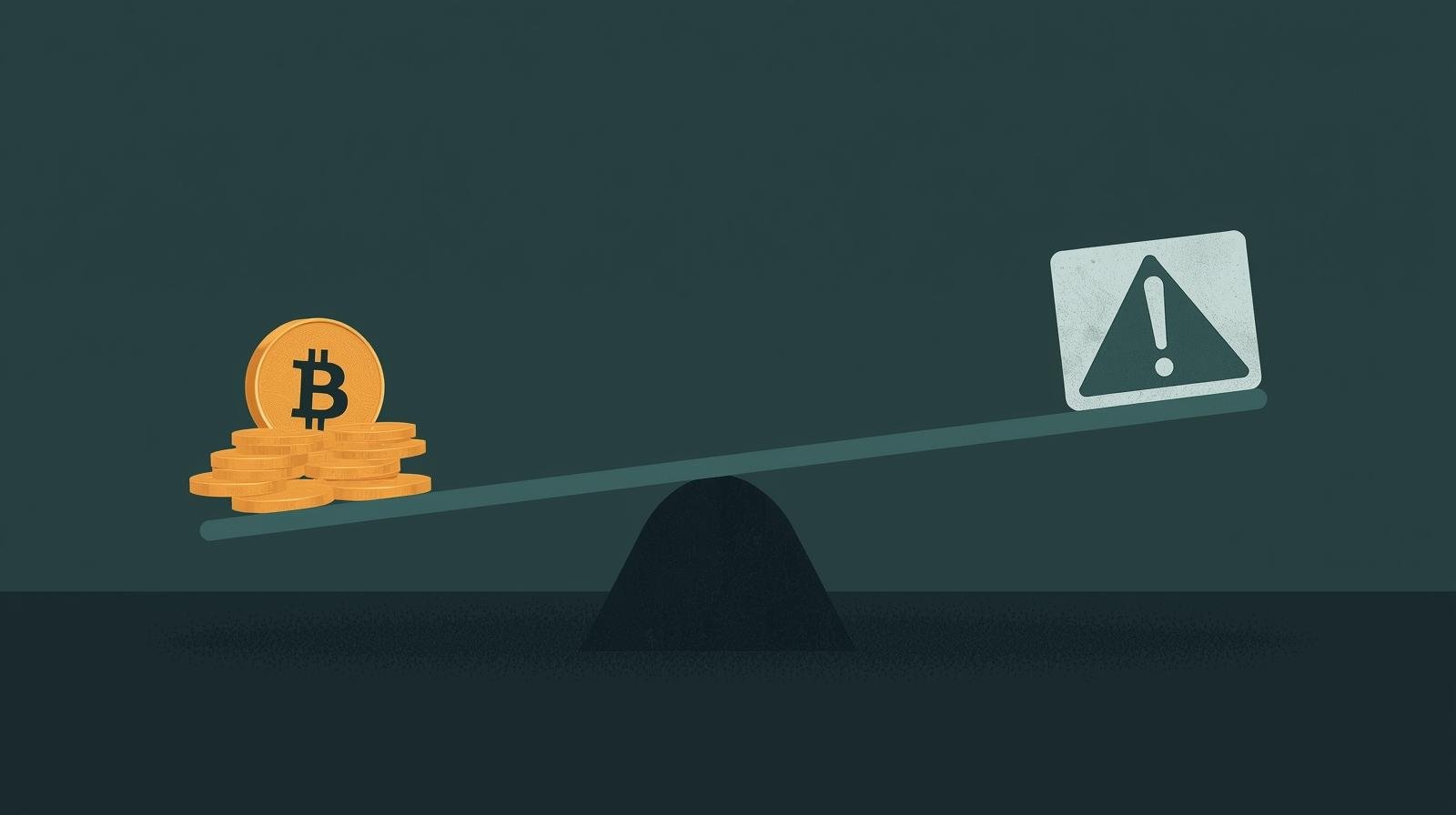

Nineteen Billion Dollars
Nineteen billion dollars. Not over a quarter, not over a month — over a single weekend in October 2025. Nineteen billion in leveraged crypto positions, liquidated. Gone. The largest wipeout in the history of digital assets, triggered by a tariff headline that Wall Street shrugged off by Monday morning.
Bitcoin’s open interest didn’t decline — it collapsed. Ethereum followed within hours. Across major exchanges, accounts with five and six figures on Friday night showed zero by Sunday. Thousands of them. The charts didn’t look like selloffs. They looked like someone had pulled the plug.
The First Win
Every leveraged trader remembers the first time it worked. You put up $500, open a 20× long, and a 3% move hands you $300 in profit. That kind of return rewires how you think about risk. Not because you suddenly believe you’re a genius — but because you’ve got evidence in your account balance that the risk was worth it. Next time you size the same way. The time after that, bigger. The last two worked, didn’t they?
In retail crypto, 50× and 100× leverage isn’t buried in a pro-tools menu. It’s the default pitch. Exchanges compete on who offers the highest multiplier, knowing full well that the vast majority of traders using those levels will be liquidated. The fee revenue from opening and closing these positions is enormous. The risk sits entirely with the user.
The Cascade
When a leveraged position moves against you far enough, the exchange liquidates it — forces the trade closed to recover its loan. One liquidation is routine. Ten thousand liquidations, all triggered within minutes of each other, is something else entirely.
A price drop forces the first round of liquidations. Those forced sales push the price lower. Lower again. More liquidations. The feedback loop has no off switch — it runs until the leverage is gone or the order book is empty, whichever comes first.
In traditional markets, circuit breakers exist for this reason. Trading halts. Cooling-off periods. Crypto has none of that. The market runs 24/7, and a cascade that starts at 2 a.m. on Sunday can finish before anyone wakes up to check their phone.
Who Gave Them the Rope
Here’s the question nobody in crypto media wants to ask: who let these positions exist?
On the NYSE, FINRA caps retail margin at 2×. The CME limits crypto futures leverage to about 2.5× for most retail accounts. Those limits exist because regulators understand what happens when unsophisticated money meets unlimited borrowing. It ends in the carnage that played out in October.
Offshore crypto exchanges operate outside those guardrails. Binance, Bybit, OKX — they have all offered 100× leverage to anyone with a phone and an email address. One hundred to one. A one-percent move against you and your account is gone. When Bitcoin slid on tariff fears, those engines cut open interest in half across major exchanges and wiped out over 6,300 wallets on Hyperliquid alone.
The exchanges walked away fine. They always do.
What Survived
The traders who made it through October didn’t have a secret. They had less leverage. Two or three times their capital, not twenty. They had stops set before they entered, not mental notes about where they’d “probably” exit. They treated borrowed money like borrowed money — something with a cost that comes due whether the trade works or not.
The traders who got wiped out weren’t random gamblers. They were long Bitcoin in what was, by every measure, a bull market. They read the trend right. They had the thesis right. What they got wrong was how much borrowed money they strapped to that thesis, and how little room the market would give them to be right slowly.
They were right about the direction. The leverage made sure it didn’t matter.